The narrative segment focuses on the unfolding societal dynamics within the revolutionary farm. It details the characters’ interactions and the emerging power struggles as the animals attempt to govern themselves. Significant events include the further development of Snowball and Napoleon’s ideological conflict, the introduction of material temptations, and the manipulation of language to sway public opinion.
This portion of the allegory is crucial for understanding the corruption of revolutionary ideals. It illustrates how ambition and lust for power can undermine even the most well-intentioned uprisings. Its value lies in its depiction of the slippery slope from collective ownership to totalitarian control, offering a cautionary tale about the dangers of unchecked authority.
The subsequent discussion will delve into the key themes present within this narrative section, analyzing the roles of specific characters and dissecting the methods employed to solidify control over the farm and its inhabitants.
Navigating Societal Shifts
Understanding the progression of events in this section requires careful attention to detail and an awareness of the underlying allegorical representation. The following points are presented for a deeper analysis.
Tip 1: Recognize the Subtle Power Grab: Be attentive to how seemingly small disagreements are leveraged to gain authority. Observe the gradual erosion of collective decision-making in favor of individual control.
Tip 2: Analyze the Role of Propaganda: Notice how language is used to distort reality and manipulate the animals’ perceptions. Pay close attention to Squealer’s justifications and reinterpretations of historical events.
Tip 3: Identify the Symbolism of Material Goods: Contemplate the significance of objects like ribbons and sugar. These seemingly minor items reveal the characters’ growing desires and the breakdown of the original egalitarian ideals.
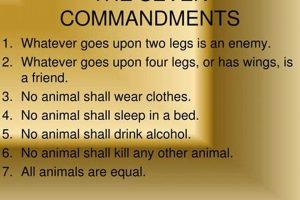
Tip 4: Understand the Manipulation of Memory: Scrutinize how past events are rewritten to suit the current leadership’s agenda. The alteration of the Seven Commandments serves as a prime example of this tactic.
Tip 5: Discern the Consequences of Blind Faith: Evaluate the impact of unquestioning loyalty on the animals’ ability to perceive the truth. Boxer’s unwavering belief in Napoleon, despite mounting evidence to the contrary, underscores this point.
Tip 6: Track the Erosion of Freedom: Note the subtle ways in which the animals’ freedoms are curtailed, masked under the guise of improved security or productivity. The increasing restrictions on movement and communication illustrate this gradual decline.
These considerations aid in comprehending the complexities inherent within the text. By critically assessing these elements, a more complete understanding of the narrative’s underlying message is attained.
The subsequent examination will focus on the lasting implications of these events and their relevance to broader societal contexts.
1. Snowball's committees
Within Chapter 5 of Animal Farm, Snowball’s committees represent a pivotal component of the narrative’s unfolding allegorical commentary on revolutionary movements. These committees, dedicated to various initiatives such as improving literacy and animal welfare, exemplify the initial idealism and intellectual ferment that often characterize early stages of revolution. They reflect a sincere attempt to improve the lives of the animals through education and innovation. However, they are also portrayed as somewhat impractical and ineffectual, failing to address the immediate and pressing needs of the farm population. This ineffectiveness provides a vulnerability that Napoleon effectively exploits.
The importance of Snowball’s committees lies in their contrast to Napoleon’s methods of governance. While Snowball pursues a strategy of broad-based improvement through education and empowerment, Napoleon favors centralized control and direct action. The failure of the committees, whether real or perceived, allows Napoleon to discredit Snowball’s approach and justify his own authoritarian tactics. A real-world parallel can be drawn with the various revolutionary movements throughout history where idealistic, democratic initiatives were ultimately supplanted by more authoritarian regimes that prioritized control and stability over individual freedoms.
In essence, Snowball’s committees serve as a critical element in understanding the decay of revolutionary ideals within the narrative. They illustrate the challenges of implementing idealistic policies in a complex and resource-scarce environment, highlighting how these challenges can be exploited to justify the suppression of dissenting voices and the consolidation of power. The events depicted in Chapter 5 underscore the ease with which genuine attempts at reform can be undermined and used as pretext for authoritarianism, thereby underscoring the importance of vigilance and critical thinking in any revolutionary context.
2. Mollie's vanity
Within Chapter 5 of Animal Farm, Mollie’s vanity serves as a subtle yet significant indicator of the growing tensions and the eventual corruption of the revolution’s initial principles. Her attachment to superficial comforts and symbols of the old regime highlights the challenges of achieving complete ideological purity in a revolutionary society. It sets a stage for more blatant betrayals of the revolution.
- Rejection of Revolutionary Ideals
Mollie’s vanity manifests in her fondness for ribbons and sugar cubes, remnants of her life under Mr. Jones. These items symbolize the luxury and self-indulgence associated with the human world, which the animals supposedly rejected. Her unwillingness to relinquish these comforts demonstrates a fundamental disconnect from the revolutionary ethos of self-sacrifice and equality, revealing a lack of commitment to the collective goals of Animal Farm.
- Symbolism of Materialism
The ribbons and sugar are not merely objects of desire; they represent a broader attraction to materialism and a resistance to the austere, egalitarian vision of Animalism. Mollie’s desire for these items reveals a lingering attachment to the hierarchical structure of the old society, where status and privilege were determined by material possessions. This foreshadows the eventual re-emergence of inequality on the farm, where some animals (the pigs) begin to enjoy luxuries while others continue to toil under harsh conditions.
- Conflict with Collective Identity
Mollie’s individual desires clash directly with the collective identity that the animals are attempting to forge. Her refusal to embrace the new norms of Animal Farm disrupts the sense of unity and shared purpose that is essential for the revolution’s success. This creates a tension between individual freedom and collective responsibility, a tension that is constantly exploited by Napoleon and the pigs to consolidate their power.
- Foreshadowing Betrayal
Mollie’s ultimate departure from Animal Farm, after being confronted about her interactions with humans, underscores the incompatibility of her values with the revolutionary principles. Her defection foreshadows the more significant betrayals that will occur later in the novel, as other animals are seduced by the promises of power and privilege. It highlights how the allure of individual gain can undermine the collective good, ultimately leading to the failure of the revolution.
Mollie’s vanity, as depicted in Chapter 5, is not merely a character flaw but a symbolic representation of the challenges inherent in revolutionary movements. Her attachment to material comforts serves as a cautionary tale about the seductive power of the old regime and the difficulty of achieving true ideological purity. This subtly exposes how human weakness can be a catalyst for the corruption of revolutionary ideals.
3. Windmill debate
The “windmill debate” is a pivotal event within Animal Farm Chapter 5, serving as the primary catalyst for the overt power struggle between Snowball and Napoleon. It represents a critical juncture where diverging visions for the farm’s future become irreconcilable, leading directly to Snowball’s expulsion and the consolidation of Napoleon’s authority. The debate is not merely about the construction of a windmill; it symbolizes the fundamental ideological conflict between progress through collective effort and advancement through autocratic control. Snowball advocates for technological advancement and improved living conditions through the windmill, while Napoleon initially opposes the project, prioritizing immediate concerns and consolidating his power base.
The significance of the “windmill debate” extends beyond its immediate consequences within the narrative. It serves as an allegory for historical instances where ideological disagreements have led to the suppression of dissenting voices and the rise of totalitarian regimes. Examples from the Russian Revolution, where internal conflicts between different factions vying for control resulted in the elimination of political rivals, are readily apparent. The practical significance of understanding this dynamic lies in recognizing the dangers of unchecked power and the importance of maintaining open dialogue and critical thinking within any societal structure. The manipulation of the debate by Squealer, who distorts facts and appeals to the animals’ fears, underscores the importance of media literacy and the ability to discern propaganda.
The “windmill debate” in Animal Farm Chapter 5 is not simply a plot device; it is a microcosm of the larger themes of the novel, reflecting the corruption of revolutionary ideals and the insidious nature of power. The silencing of Snowball and the subsequent adoption of the windmill plan by Napoleon highlight the cynical manipulation of revolutionary goals for personal gain. Understanding the “windmill debate” is essential for grasping the novel’s critique of totalitarianism and its enduring relevance as a cautionary tale about the fragility of democracy and the importance of vigilance against authoritarian tendencies.
4. Napoleon's expulsion
The event referred to is, more accurately, Snowball’s expulsion orchestrated by Napoleon in Animal Farm Chapter 5. This incident is a direct consequence of the escalating power struggle between the two pigs. The chapter culminates with Napoleon utilizing trained dogs, previously hidden from the other animals, to violently chase Snowball off the farm. This act marks a turning point in the narrative, signifying the end of open debate and democratic processes on Animal Farm and the beginning of Napoleon’s totalitarian rule. It underscores the brutal suppression of dissent that often accompanies revolutions as they devolve into authoritarianism.
The manipulation of the other animals is a key element in understanding the significance of this moment. Napoleon strategically employs Squealer to spread propaganda and misinformation, discrediting Snowball and justifying Napoleon’s actions. This manipulation highlights the importance of controlling information in maintaining power, a tactic often employed by authoritarian regimes. Examples throughout history, such as the Soviet Union’s use of state-controlled media to demonize political opponents, parallel Squealer’s role. The practical significance of understanding this manipulation lies in developing critical thinking skills and the ability to recognize propaganda in contemporary society.
Snowball’s forced departure, facilitated through violence and propaganda, effectively removes the only significant opposition to Napoleon’s ambition. Animal Farm Chapter 5 lays the foundation for Napoleon’s subsequent consolidation of power and the erosion of the revolution’s original ideals. The event serves as a stark warning against the dangers of unchecked authority and the importance of safeguarding democratic principles. The challenge lies in recognizing these patterns within real-world contexts and actively resisting the suppression of dissenting voices.
5. Fear, dogs
The introduction of trained dogs in Animal Farm Chapter 5 marks a critical escalation in Napoleon’s power grab, injecting an atmosphere of palpable fear into the farm’s social dynamics. The dogs, explicitly serving as Napoleon’s personal enforcers, represent brute force and the suppression of dissent. This instills fear within the other animals, effectively silencing opposition and solidifying Napoleon’s autocratic control. The direct link between fear and the dogs as agents of that fear is central to understanding the chapter’s significance as a turning point in the allegory.
The use of fear as a tool of control, exemplified by the dogs’ presence and deployment, mirrors historical instances of totalitarian regimes utilizing secret police or paramilitary groups to instill obedience and eliminate opposition. The KGB in the Soviet Union or the Gestapo in Nazi Germany serve as real-world examples where fear, enforced through the threat of violence and surveillance, became a primary mechanism for maintaining power. Understanding this dynamic in Animal Farm Chapter 5 allows for a critical examination of how fear can be manipulated to undermine freedom and democratic principles in broader societal contexts. This involves recognizing the warning signs of authoritarianism, such as the erosion of civil liberties and the demonization of dissenting voices. The presence of unquestioning enforcers, like the dogs, is a key indicator.
In summary, the introduction of the dogs and the subsequent atmosphere of fear in Animal Farm Chapter 5 are inextricably linked. They represent the transition from revolutionary ideals to oppressive control. Understanding this connection allows for recognizing the manipulative power of fear and the importance of resisting the erosion of freedom in any social or political system. The challenge lies in identifying these patterns early and fostering a culture of critical thinking and open dialogue to counter the forces of authoritarianism.
6. Squealer's explanations
In Animal Farm Chapter 5, Squealer’s explanations are instrumental in shaping the narrative and solidifying Napoleon’s control. His rhetoric serves as a tool for manipulating the other animals’ perceptions of events, rewriting history, and justifying actions that contradict the original principles of Animalism. This role is pivotal in understanding the chapter’s thematic focus on the corruption of revolutionary ideals.
- Revisionist History
Squealer frequently revises the historical narrative to suit Napoleon’s agenda. For example, he distorts the animals’ memories of Snowball’s role in the Battle of the Cowshed, portraying him as a traitor and Napoleon as the true hero. This manipulation of historical facts is a common tactic employed by totalitarian regimes to control the narrative and maintain power. Examples include the Soviet Union’s rewriting of history to demonize political opponents and glorify the Communist Party. In Animal Farm Chapter 5, this tactic is crucial for discrediting Snowball and legitimizing Napoleon’s leadership.
- Justification of Actions
Squealer provides justifications for Napoleon’s increasingly authoritarian actions, often couching them in terms of necessity or the greater good of the farm. When Napoleon abolishes the Sunday Meetings, Squealer convinces the animals that this decision is for their own protection, preventing them from making misguided choices. Such justifications echo real-world instances where authoritarian leaders claim that restricting freedoms is necessary for national security or economic stability. In the context of Animal Farm Chapter 5, these explanations allow Napoleon to consolidate power under the guise of acting in the animals’ best interests.
- Use of Complex Language
Squealer often uses complex language and jargon to confuse the other animals, preventing them from fully understanding the implications of Napoleon’s policies. He employs sophisticated arguments and rhetorical devices to obscure the truth and make dissenting voices appear ignorant or misguided. This tactic is similar to the way political elites often use specialized language to maintain control over policy discussions, excluding ordinary citizens from meaningful participation. Within Animal Farm Chapter 5, this linguistic manipulation contributes to the animals’ inability to challenge Napoleon’s authority effectively.
- Appealing to Fear and Loyalty
Squealer’s explanations frequently appeal to the animals’ fears and their sense of loyalty to Animal Farm. He warns them of the dangers of returning to the rule of Mr. Jones, emphasizing the need for unity and obedience to Napoleon. This strategy creates a climate of fear and discourages critical thinking, making the animals more susceptible to manipulation. This is comparable to how authoritarian regimes often use propaganda to create a sense of national crisis, justifying repressive measures in the name of national security. In Animal Farm Chapter 5, this tactic is instrumental in preventing the animals from questioning Napoleon’s growing power.
The facets of Squealer’s explanations, as demonstrated within Animal Farm Chapter 5, reveal the insidious nature of propaganda and its role in the erosion of revolutionary principles. By manipulating history, justifying actions, employing complex language, and appealing to fear, Squealer effectively silences dissent and enables Napoleon to establish a totalitarian regime. These tactics highlight the enduring relevance of Animal Farm as a cautionary tale about the dangers of unchecked power and the importance of critical thinking.
7. End of debate
The cessation of meaningful debate in Animal Farm Chapter 5 marks a watershed moment, signifying the consolidation of Napoleon’s power and the demise of the revolution’s initial ideals of equality and collective decision-making. The chapter culminates with the violent expulsion of Snowball, physically eliminating the dissenting voice and effectively ending any prospect of reasoned discussion regarding the farm’s future direction. This event establishes a climate of fear and obedience, silencing opposition and paving the way for Napoleon’s autocratic rule. The “end of debate” is not merely a plot point; it is a symbolic representation of the suppression of free thought and the imposition of a single, unchallenged narrative.
The “end of debate” in Animal Farm Chapter 5 resonates with historical instances where authoritarian regimes have systematically silenced dissent and eliminated political opposition to maintain control. The suppression of free speech and the persecution of intellectuals in Stalinist Russia, the banning of opposition parties in Nazi Germany, and the control of information through state-controlled media in various totalitarian states are all parallels to the events depicted in the chapter. The practical significance of understanding this connection lies in recognizing the warning signs of eroding democratic processes and the importance of safeguarding freedom of expression and open dialogue. It involves actively promoting critical thinking, media literacy, and the ability to discern propaganda. The consequences of failing to protect these values are vividly illustrated by the transformation of Animal Farm from a beacon of revolutionary hope into a dystopian society ruled by fear and oppression.
The “end of debate” in Animal Farm Chapter 5 serves as a stark reminder of the fragility of democracy and the constant vigilance required to protect it. The chapter underscores the importance of actively engaging in constructive dialogue, challenging authority, and resisting attempts to suppress dissenting voices. The challenge lies in fostering a culture where critical thinking and open exchange of ideas are valued and protected, even in the face of pressure to conform. The events on Animal Farm serve as a cautionary tale, highlighting the potential consequences of apathy and the erosion of democratic principles.
Frequently Asked Questions
This section addresses common inquiries regarding this narrative segment, providing clarification on key events and their significance within the broader allegorical context.
Question 1: What is the primary focus?
It primarily focuses on the escalating power struggle between Snowball and Napoleon and the subsequent expulsion of Snowball from the farm. It details the shift from initial revolutionary ideals towards authoritarian control.
Question 2: What role does Squealer play in the narrative?
Squealer acts as Napoleon’s propagandist, manipulating the other animals’ perceptions through the distortion of facts and the rewriting of history. His explanations are crucial for justifying Napoleon’s actions and maintaining his control.
Question 3: Why is Snowball expelled?
Snowball is expelled because he represents a threat to Napoleon’s ambition for total control. Their differing visions for the farm and Snowball’s charisma made him a rival that Napoleon could not tolerate.
Question 4: What is the significance of the dogs introduced in the chapter?
The dogs symbolize brute force and the suppression of dissent. They are Napoleon’s personal enforcers, used to instill fear and obedience among the other animals.
Question 5: What does the “end of debate” signify?
The “end of debate” signifies the demise of democratic processes and the consolidation of Napoleon’s autocratic rule. It marks the suppression of free thought and the imposition of a single, unchallenged narrative.
Question 6: How does Mollie’s behavior contribute to the chapter’s themes?
Mollie’s vanity and attachment to the comforts of the old regime highlight the challenges of achieving ideological purity and the allure of materialism, foreshadowing the corruption of revolutionary ideals.
In conclusion, the events within it serve as a crucial turning point, illustrating the transition from revolutionary ideals to oppressive control and highlighting the dangers of unchecked power.
The subsequent section will delve into the enduring relevance of these themes and their applicability to contemporary societal issues.
Concluding Analysis of a Pivotal Narrative Section
Animal Farm Chapter 5 serves as a critical juncture in Orwell’s allegory, marking a definitive shift from revolutionary idealism to oppressive control. The chapter’s events, including the expulsion of Snowball, the manipulation of language by Squealer, and the introduction of the dogs as instruments of fear, collectively demonstrate the insidious nature of power and the fragility of democratic principles. The themes explored within this section, such as the corruption of revolutionary ideals, the suppression of dissent, and the manipulation of information, provide a stark warning against the dangers of unchecked authority and the erosion of freedom.
The lessons gleaned from a comprehensive analysis of Animal Farm Chapter 5 remain profoundly relevant in contemporary society. The narrative underscores the importance of vigilance against authoritarian tendencies, the need for critical thinking and media literacy, and the value of safeguarding open dialogue and freedom of expression. A continued engagement with these themes fosters a deeper understanding of power dynamics and promotes a commitment to preserving democratic values in an increasingly complex world.