The concluding section of George Orwell’s allegorical novella, Animal Farm, provides a concise overview of the farm’s state years after the revolution. It encapsulates the culmination of the pigs’ gradual corruption and the animals’ descent into a state arguably worse than under Mr. Jones’s rule. This concluding synopsis highlights the complete reversal of the original principles of Animalism and the erasure of distinctions between the oppressors and the oppressed.
Understanding the final chapter is crucial for grasping the novel’s central message about the dangers of totalitarianism and the ease with which revolutions can be betrayed. It underscores the cyclical nature of power and the tendency for those in authority to exploit and manipulate others for their own gain. The chapter’s impact lies in its stark depiction of how easily ideals can be corrupted and used to justify oppression, rendering the animals’ initial hopes for equality and freedom tragically unrealized.
The following analysis will delve into the key events and themes present in the concluding section of Animal Farm, exploring the specific methods used by the pigs to consolidate their power and the consequences for the other animals on the farm. This examination will highlight the enduring relevance of Orwell’s critique of power, social class, and the potential for political systems to devolve into tyranny.
Analyzing the Culmination of Orwell’s Animal Farm
To fully comprehend the concluding chapter, a careful examination of its elements is essential.
Tip 1: Identify the Symbolic Representation of Each Animal. Understanding which real-world figures or groups the animals represent will deepen the interpretation of their actions in the chapter.
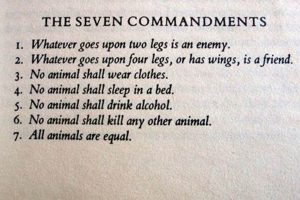
Tip 2: Trace the Erosion of the Seven Commandments. The gradual rewriting and ultimate abandonment of the original principles of Animalism is a key indicator of the pigs’ corruption. Note the subtle changes and justifications.
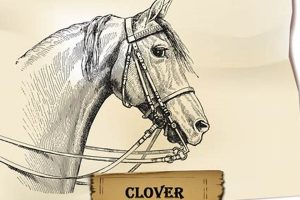
Tip 3: Analyze the Depiction of the Working Animals. Observe the apathy and disillusionment of animals like Clover and Benjamin. Their acceptance of the new reality highlights the insidious nature of oppression.
Tip 4: Recognize the Significance of the Pigs’ Physical Transformation. The pigs’ evolution to resemble humans is a visual representation of their moral corruption and their complete assumption of the oppressors’ role.
Tip 5: Consider the Role of Squealer. Squealer’s propaganda is crucial to maintaining the pigs’ control. Analyze the methods he uses to manipulate the other animals’ perceptions.
Tip 6: Evaluate the Ending’s Ambiguity. The final scene, where the animals cannot distinguish between the pigs and the humans, is open to interpretation. Consider the various implications of this conclusion.
Tip 7: Connect the Chapter to Broader Historical Context. Understanding the Russian Revolution and the rise of Stalinism will provide a richer understanding of Orwell’s critique.
By focusing on these specific elements, a deeper and more nuanced understanding of the chapter can be achieved, revealing the full extent of Orwell’s warning against unchecked power.
With this understanding, one can appreciate the potent message embedded within the closing narrative of Animal Farm and its lasting implications for any society susceptible to tyranny.
1. Pigs mirror humans
The culminating depiction of pigs mirroring humans in Animal Farm’s final chapter serves as the ultimate symbol of the revolution’s failure. This transformation is not merely physical, but represents a complete adoption of human vices and a betrayal of the foundational principles upon which the animal society was initially built. The mirroring is relevant for complete interpretation of chapter 10 animal farm summary.
- Adoption of Human Habits
The pigs begin to walk on two legs, wear clothes, and engage in trade. This physical transformation reflects their internal shift away from the original ideals of Animalism. For instance, the pigs start drinking alcohol and sleeping in beds, activities explicitly forbidden in the early days of the revolution. This adoption of human habits signifies their embrace of luxury and comfort at the expense of the other animals.
- Exploitation and Oppression
Just as Mr. Jones exploited the animals for his own gain, the pigs perpetuate a similar system of oppression, albeit under a different banner. They control the farm’s resources, dictate the animals’ labor, and manipulate information to maintain their power. The pigs use Squealer’s propaganda to justify their actions and to suppress any dissent, mirroring the ways in which human rulers use propaganda and censorship to control their populations.
- Corruption of Ideals
The original principles of Animalism, such as “All animals are equal,” are gradually rewritten and ultimately replaced with the single maxim, “All animals are equal, but some animals are more equal than others.” This corruption of ideals highlights the insidious nature of power and the ease with which revolutionary principles can be distorted to serve the interests of a ruling elite. The pigs’ manipulation of language and ideology is a key element in their consolidation of power.
- Loss of Identity
The animals’ inability to distinguish between the pigs and the humans at the end of the chapter signifies the complete erasure of the distinction between oppressor and oppressed. The farm has come full circle, with the pigs becoming indistinguishable from the humans they initially sought to overthrow. This loss of identity underscores the cyclical nature of power and the tragic failure of the revolution to create a more just and equitable society.
These facets, culminating in the pigs’ mirrored image of humanity, reinforce the overarching message of Animal Farm’s concluding chapter. The pigs embody the very traits they fought against, thereby validating the notion that unchecked power, regardless of the initial intentions, can lead to corruption and the perpetuation of oppression. This transformation completes the cautionary tale embedded within Orwell’s allegory.
2. Animalism abandoned
The abandonment of Animalism in Animal Farm is inextricably linked to the events and themes presented in its concluding chapter. This ideological collapse forms the cornerstone of the narrative’s tragic outcome and directly explains the bleak state of the farm years after the initial revolution.
- Erosion of Original Principles
The core tenets of Animalism, designed to ensure equality and freedom from human oppression, are systematically dismantled throughout the novel. In the concluding chapter, these principles are virtually nonexistent. The rewriting of the Seven Commandments, culminating in the single maxim “All animals are equal, but some animals are more equal than others,” exemplifies this erosion. This directly leads to the pigs’ complete dominance and the other animals’ subjugation.
- Shift Towards Human-like Exploitation
Animalism was intended to prevent the exploitation of animals by humans. However, the pigs, in their abandonment of Animalism, begin to replicate and even surpass the exploitative practices of Mr. Jones. They engage in trade with humans, force the other animals into grueling labor, and hoard resources for their own benefit. This shift demonstrates how the abandonment of ideological principles leads to a return to the very conditions the revolution sought to abolish.
- Suppression of Dissent and Independent Thought
The pigs actively suppress any dissenting voices or independent thought that might challenge their authority. Squealer’s propaganda and the use of fear tactics are employed to maintain control and prevent the other animals from questioning the pigs’ actions. This suppression is a direct consequence of abandoning the principles of open discussion and collective decision-making that were initially envisioned under Animalism.
- Loss of Collective Memory and Purpose
The abandonment of Animalism leads to a loss of collective memory and purpose among the animals. The younger generation, unfamiliar with the original ideals of the revolution, accepts the pigs’ rule as the natural order. The older animals, like Clover and Benjamin, are weary and disillusioned, resigned to their fate. This loss of historical awareness and revolutionary spirit further solidifies the pigs’ control and perpetuates the cycle of oppression.
In conclusion, the fate of Animal Farm, as portrayed in its final chapter, is a direct consequence of abandoning Animalism. This ideological failure results in the pigs’ rise to power, the exploitation of the other animals, and the ultimate collapse of the revolution’s initial promise. The absence of Animalism underscores the novel’s central message about the dangers of unchecked power and the importance of maintaining ideological integrity in the pursuit of social justice.
3. Working animals' despair
The encompassing despair of the working animals forms a critical element in the concluding chapter. It serves as a potent manifestation of the failed revolution and the pigs’ consolidation of power. This distress is not merely a backdrop to the narrative; it represents the ultimate outcome of the corruption and exploitation that define the later years of Animal Farm. The animals’ initial hopes for a life free from human oppression are systematically crushed, leaving them in a state of apathy and resignation. The chapter’s summary cannot be complete without addressing this sense of futility.
The working animals’ despair stems directly from the pigs’ betrayal of the original principles of Animalism. They experience increased workloads, reduced rations, and a lack of any meaningful improvement in their living conditions. The pigs, meanwhile, live in comfort and luxury, flaunting their power and privilege. This disparity fuels the animals’ disillusionment and reinforces their belief that the revolution has ultimately failed. Examples can be seen in the characters like Boxer whose unwavering dedication and eventual demise underscore the tragic consequences of blindly trusting the ruling class. Their despair is, therefore, a measure of the degree to which the pigs have deviated from the ideals of equality and fairness. The practical significance of recognizing this despair lies in its parallels to real-world situations where oppressive regimes exploit and demoralize their populations, leading to widespread hopelessness and a loss of agency.
The concluding chapter explicitly depicts the working animals as downtrodden and resigned to their fate. They have lost the spirit of rebellion and no longer question the pigs’ authority. Their despair is palpable, and it serves as a stark warning about the dangers of unchecked power and the importance of maintaining vigilance against corruption and tyranny. Understanding the root causes and consequences of this despair is essential for appreciating the full scope of Orwell’s message and its relevance to contemporary issues of social justice and political accountability. The chapter’s summary reinforces that true revolution requires perpetual commitment to its foundational principles and a relentless defense against those who would seek to subvert them for their own gain.
4. Cyclical oppression
The concluding chapter of Animal Farm profoundly illustrates the concept of cyclical oppression, thereby solidifying one of the novel’s central arguments about the nature of power. The chapter depicts a return to conditions resembling those under Mr. Jones, highlighting the tendency for oppressive systems to perpetuate themselves, regardless of initial revolutionary ideals.
- Replacement of One Oppressor with Another
The initial aim of the animal revolution was to overthrow human tyranny and establish an egalitarian society. However, the pigs gradually seize power and replicate the very oppressive tactics they once opposed. Chapter 10 culminates in a scenario where the pigs, indistinguishable from humans, engage in the same exploitative behaviors, effectively replacing one set of oppressors with another. This mirrors historical instances where revolutionary movements, intended to liberate the oppressed, ultimately lead to the rise of new autocratic regimes.
- Manipulation of Ideology to Justify Oppression
The pigs manipulate the principles of Animalism, distorting and rewriting the Seven Commandments to justify their increasingly authoritarian rule. This ideological manipulation allows them to frame their actions as being in the best interests of the farm, even as they exploit and oppress the other animals. This tactic is frequently observed in real-world scenarios, where oppressive regimes employ propaganda and censorship to maintain control and suppress dissent.
- Institutionalization of Inequality
As the pigs consolidate their power, they establish systems and structures that institutionalize inequality. They control access to resources, dictate labor, and suppress any challenges to their authority. This institutionalization of inequality creates a self-perpetuating cycle of oppression, where the pigs’ dominance becomes entrenched and difficult to dislodge. This parallels historical examples of systemic discrimination and inequality, where laws and social norms are used to maintain the power of dominant groups.
- Suppression of Collective Memory and Historical Revisionism
The pigs actively suppress collective memory and rewrite history to legitimize their rule and prevent the other animals from questioning their actions. They manipulate information, fabricate narratives, and erase any evidence of their past transgressions. This suppression of historical truth serves to reinforce the cyclical nature of oppression by preventing the animals from learning from past mistakes and resisting future tyranny. It mirrors historical instances of authoritarian regimes rewriting history to suit their own political agendas.
In essence, the concluding chapter of Animal Farm provides a stark and cautionary depiction of cyclical oppression. The pigs’ transformation into human-like oppressors underscores the enduring challenges of achieving genuine social change and the constant threat of power corrupting even the most idealistic revolutions. The chapter serves as a warning against complacency and the importance of remaining vigilant against any form of tyranny, regardless of its source or justification.
5. Loss of identity
In the context of chapter 10 animal farm summary, the loss of identity represents a critical consequence of the pigs’ gradual corruption and the ultimate failure of the animal revolution. This loss transcends mere physical resemblance to humans; it signifies the erosion of distinct values, principles, and collective memory that initially defined the animals’ community. The erosion is directly caused by the pigs’ manipulation of language, historical revisionism, and suppression of dissenting voices. Consequently, the animals become unable to differentiate between their former oppressors (the humans) and their current rulers (the pigs), thereby completing a cycle of tyranny. This loss of identity is not simply a plot device; it represents the culmination of Orwell’s critique on totalitarianism, where individuality and critical thought are sacrificed in favor of conformity and obedience.
The practical significance of understanding the ‘loss of identity’ within the chapter lies in its parallels to real-world instances of ideological manipulation and cultural assimilation. Examples abound in history, from the Soviet Union’s suppression of national identities within its satellite states to modern-day propaganda campaigns aimed at eroding trust in independent media and critical thinking. By recognizing the mechanisms through which identity is eroded control of information, rewriting history, suppression of dissent individuals and societies can develop resilience against such tactics. It also highlights the importance of preserving cultural heritage, promoting critical education, and fostering open dialogue to safeguard against the loss of collective identity.
In summary, the loss of identity in the concluding chapter of Animal Farm serves as a stark warning about the dangers of unchecked power and the erosion of fundamental values. The practical implications of this understanding extend beyond the literary realm, offering valuable insights into the challenges of preserving cultural and individual identity in the face of manipulation and oppression. The absence of a clear sense of self leaves individuals vulnerable to control, thereby reinforcing the cyclical nature of tyranny that Orwell so vividly portrays.
6. Equality vanished
The erasure of equality in Animal Farm’s concluding chapter is not merely a consequence of the pigs’ actions; it constitutes a central thematic element that encapsulates the tragic failure of the revolution. Chapter 10’s synopsis details the culmination of this process, exhibiting a society where initial aspirations for equitable treatment have been systematically subverted. This subversion serves as a direct outcome of the pigs’ manipulation of Animalism and the exploitation of the other animals. The vanishing of equality acts as a microcosm of societal collapse, mirrored by instances of corruption and stratification throughout history. Its prevalence signifies the triumph of self-interest over collective welfare, which the revolution sought to avert.
The importance of equalitys absence as a component of chapter 10 lies in its contribution to the understanding of the cyclical nature of power. The pigs, having initially championed equality as a means to overthrow Mr. Jones, ultimately establish a system that is even more unequal. This cycle resonates with historical examples, such as the French Revolution, where initial ideals of liberty, equality, and fraternity were eventually supplanted by the Reign of Terror and the rise of Napoleon. Understanding this cyclical pattern, where revolutionary movements often devolve into new forms of oppression, is crucial for addressing contemporary social and political challenges. It underscores the need for constant vigilance against those who seek to exploit revolutionary fervor for their own gain.
The ending summarizes that the ‘equality vanished’ aspect serves as a cautionary tale about the fragility of revolutionary ideals and the enduring threat of corruption. While the initial uprising was born from a genuine desire for fairness and liberation, the eventual outcome presents a grim picture of the dangers of unchecked power and self-serving interests. This connection highlights the enduring relevance of Orwell’s allegory, serving as a reminder of the necessity to continuously defend principles of equality and justice in the face of any societal transformation.
Frequently Asked Questions
The following questions address common inquiries and potential misunderstandings regarding the concluding chapter of George Orwell’s Animal Farm.
Question 1: What is the primary significance of the pigs’ walking on two legs in Chapter 10?
The pigs’ adoption of bipedalism symbolizes their complete transformation into human-like figures. It represents the culmination of their gradual corruption and their full assumption of the role of oppressor, thus negating the original intent of the animal revolution.
Question 2: How does the rewritten commandment, “All animals are equal, but some animals are more equal than others,” encapsulate the chapter’s themes?
This revised commandment succinctly demonstrates the complete perversion of Animalism and the establishment of a hierarchical society on the farm. It highlights the pigs’ manipulation of language and ideology to justify their dominance and the other animals’ subjugation.
Question 3: Why is the ending, where the animals cannot distinguish between the pigs and the humans, considered significant?
The animals’ inability to differentiate between the pigs and the humans signifies the complete erasure of the distinction between oppressor and oppressed. It underscores the cyclical nature of power and the tragic failure of the revolution to create a genuinely equitable society.
Question 4: What role does Squealer play in maintaining the pigs’ control in Chapter 10?
Squealer’s propaganda remains crucial to the pigs’ control. He uses persuasive rhetoric and manipulative tactics to distort reality, quell dissent, and maintain the animals’ belief in the pigs’ benevolent leadership, despite the evident injustices.
Question 5: How does the chapter depict the state of the working animals, such as Clover and Benjamin, in the years following the revolution?
The chapter portrays the working animals as weary, disillusioned, and largely resigned to their fate. They have lost the revolutionary fervor and are now apathetic to the pigs’ abuses, highlighting the insidious nature of long-term oppression.
Question 6: To what extent does the conclusion of Animal Farm reflect Orwell’s broader critique of totalitarianism?
The conclusion serves as a stark warning against the dangers of totalitarianism and the ease with which revolutions can be betrayed. It illustrates how ideals can be corrupted and used to justify oppression, highlighting the importance of vigilance and resistance against unchecked power.
In summary, the concluding chapter portrays the devastating consequences of unchecked power and the perversion of revolutionary ideals, underscoring the cyclical nature of oppression and the fragility of societal progress.
The preceding information offers a consolidated understanding of the culminating events and themes in the terminal stage of Animal Farm.
chapter 10 animal farm summary Conclusion
The preceding analysis of the culminating chapter has highlighted several key elements: the pigs’ mirroring of human traits, the complete abandonment of Animalism’s foundational principles, the encompassing despair felt by the working animals, the illustration of cyclical oppression, the pervasive loss of identity among the populace, and the final vanishing of any semblance of equality. These components, when viewed collectively, depict a grim portrait of revolutionary ideals subverted by unchecked power.
This concluding section serves not merely as a summation of events within the novel, but as a cautionary reminder of the enduring challenges inherent in achieving genuine social change. The enduring relevance of Orwell’s allegory lies in its unflinching depiction of the potential for corruption and the perpetual need for vigilance against any form of tyranny, irrespective of its ideological guise.